
A Buyer's Guide to Charcoal Export Documentation from Nigeria
From the commercial invoice to the self-heating test certificate, here is the paperwork a well-run charcoal shipment from Lagos should include — and why each document matters.
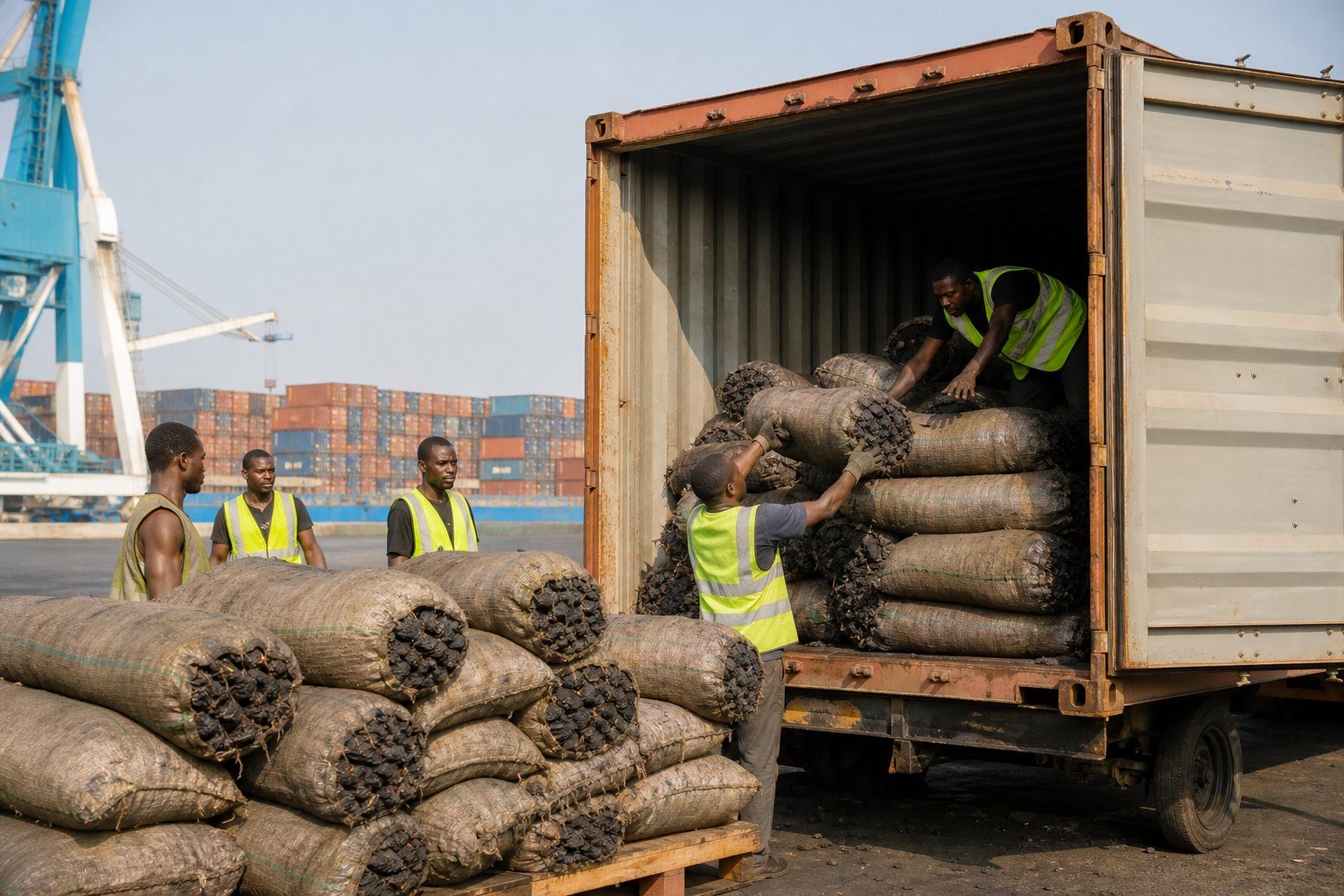
Charcoal is a regulated export in Nigeria and a regulated import in most destination markets. A shipment that arrives with incomplete documentation can be delayed, fined or refused — so understanding the document set is as important as understanding the product. Below is an overview of the documents that typically accompany a charcoal shipment from Lagos. Requirements change, so always confirm current rules with your exporter, forwarder and customs broker.
Commercial documents
- Pro-forma invoice: the basis of the order — product, grade, quantity, packing, Incoterm, price and payment terms.
- Commercial invoice and packing list: issued at shipment, used for customs clearance and payment.
- Sales contract: recommended for container programmes; defines specifications, inspection, tolerances and remedies.
Transport documents
- Bill of lading (B/L): issued by the shipping line once the container is on board; the key document of title for payment under letters of credit.
- Container loading report and photographs: not a legal requirement but a hallmark of a professional exporter — they show how the container was stuffed and sealed.
Origin, plant-health and inspection documents
- Certificate of origin: issued through the relevant Nigerian chamber of commerce; required by most importing customs authorities and for preferential tariff claims.
- Phytosanitary and/or fumigation certificate: many destinations require these for wood-derived products; issued by the Nigeria Agricultural Quarantine Service and licensed fumigators.
- Certificate of analysis / pre-shipment inspection report: laboratory results for fixed carbon, ash, moisture and volatile matter, ideally from an independent inspection company.
- Weight certificate: verified gross mass (VGM) is mandatory under SOLAS for every container.
Nigerian export compliance
- Exporter registration: the exporter must be registered with the Nigerian Export Promotion Council (NEPC) and hold a valid certificate.
- Nigeria Export Proceeds (NXP) form: processed through an authorised bank for every commercial export.
- Customs documentation and inspection: handled by a licensed customs agent at the port.
- Forestry / environmental permits: charcoal exports are subject to permits and conditions set by the Federal Ministry of Environment and relevant state forestry departments. A compliant exporter should be able to show its current permits on request.
Carrier safety requirements
Under the IMDG Code, charcoal may be treated as a self-heating substance (UN 1361) unless it is shown to be exempt. Shipping lines generally require a self-heating test report (per the UN Manual of Tests and Criteria) or an exemption certificate from an approved laboratory, together with a declaration that the charcoal has been adequately cooled and weathered. Experienced exporters obtain this before booking so that containers are accepted without delay.
Ask any prospective supplier for a sample document set from a previous shipment. If they cannot produce one, be cautious.
Our team manages the full document set for every shipment and shares drafts for your approval before the vessel sails. See the Export Process page for the full sequence, or contact us with questions about your destination's requirements.
Sourcing charcoal from Nigeria?
Get a written quotation and specification within two business days.
More Insights
Ready to Source Export-Grade Charcoal from Nigeria?
Tell us your grade, quantity, packaging and destination port. Our export team will prepare a detailed FOB or CIF quotation and a sample plan.