
How to Evaluate Charcoal Quality: Fixed Carbon, Ash, Moisture and More
A practical guide for importers to the laboratory and physical parameters that define export-grade charcoal, and what each number means in real-world use.
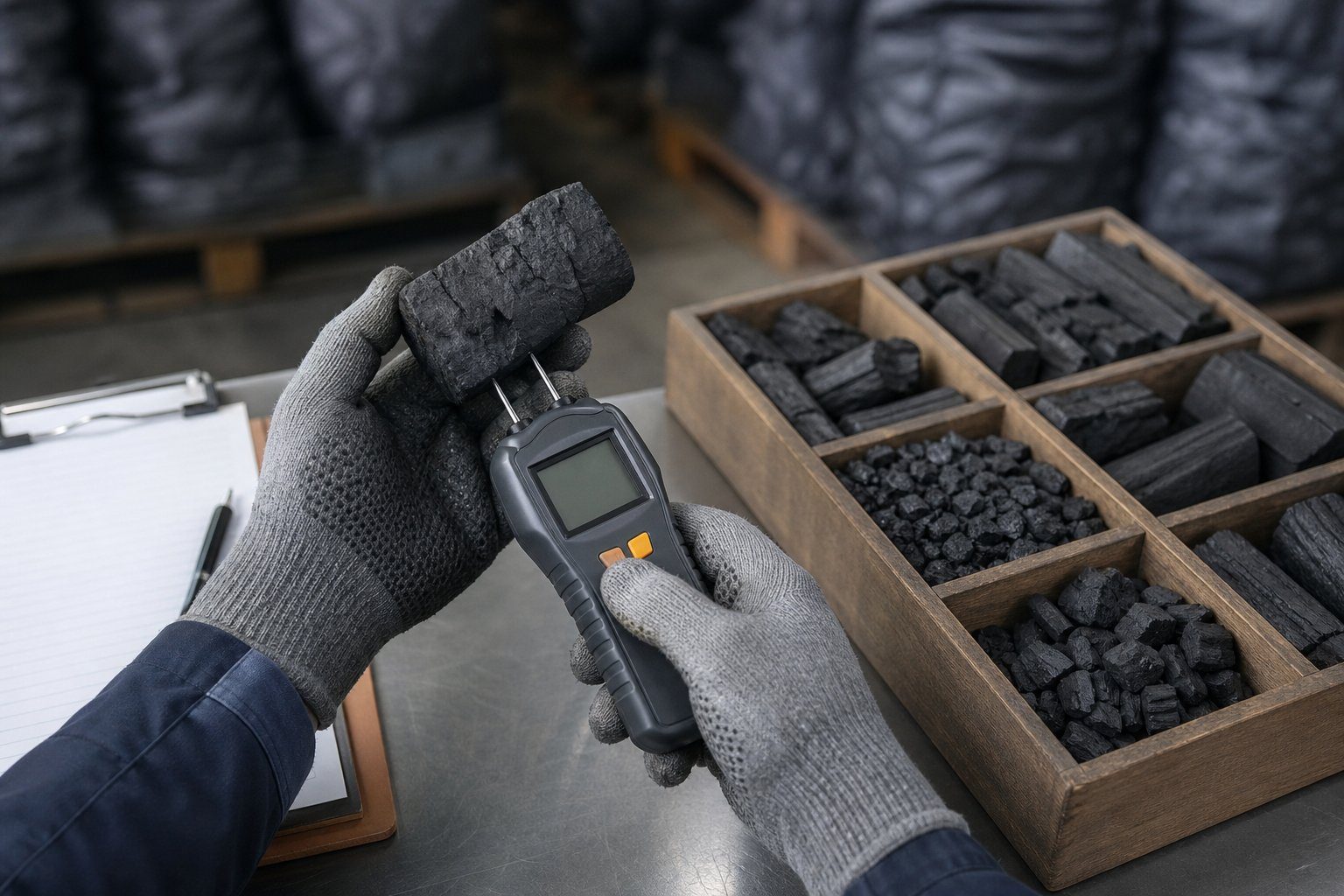
Charcoal is a deceptively simple product. Two bags can look identical and perform completely differently on the grill. For importers, the difference between a repeat customer and a returned container usually comes down to a handful of measurable parameters. Here is what they are, how they are tested and why they matter.
Fixed carbon
Fixed carbon is the proportion of the charcoal that is actually carbon after moisture, volatile matter and ash are accounted for. It is the single best indicator of how much usable heat energy a lump contains and how cleanly it will burn. Higher fixed carbon generally means a hotter, longer, less smoky burn. It is determined by proximate analysis (for example ASTM D1762) in a laboratory.
Ash content
Ash is the incombustible mineral residue left after burning. Low ash is prized in food-service because it means less cleaning, better airflow in the firebox and more consistent heat. Ash content depends mainly on wood species and how much bark and soil contamination made it into the kiln — which is why yard hygiene and sorting matter as much as the wood itself.
Moisture content
Freshly produced charcoal is hygroscopic: it absorbs water from the air and the ground. Excess moisture means the buyer is paying freight on water, the charcoal is harder to light and spits when heated, and — critically — damp, fresh charcoal is more prone to self-heating in a sealed container. Reputable exporters allow charcoal to cool and weather, store it under cover, and check moisture before bagging.
Volatile matter
Volatile matter is the fraction driven off as gas when charcoal is heated. Charcoal with high volatile content lights easily but smokes and flares more. A balance is needed: BBQ customers like easy ignition, while restaurant chefs prefer a cleaner, steadier burn with lower volatiles.
Calorific value
Expressed in kcal/kg or MJ/kg, calorific value measures total energy released per unit weight. It correlates with fixed carbon and is the figure industrial buyers care about most.
Physical parameters
- Lump size distribution: agreed as a percentage above/below defined screen sizes.
- Fines and dust: the small fraction that ends up at the bottom of the bag. Agree a maximum percentage.
- Density: a quick, practical check — dense lumps feel heavy for their size and ring when knocked together.
- Foreign matter: stones, soil, uncarbonised wood ("brands") or bark should be absent.
How to verify before you buy
- Request a current specification sheet and ask which laboratory produced the figures.
- Order a physical sample and burn-test it in the end-use application.
- For first orders, commission a third-party pre-shipment inspection (SGS, Bureau Veritas, Intertek, Cotecna) covering sampling, lab analysis and container loading.
- Agree acceptance criteria and a rejection clause in the sales contract.
Our Quality Assurance page explains the checks we carry out at each stage, and we are always happy to support third-party inspection. Have a specification you need to meet? Send it with your quotation request.
Sourcing charcoal from Nigeria?
Get a written quotation and specification within two business days.
More Insights
Ready to Source Export-Grade Charcoal from Nigeria?
Tell us your grade, quantity, packaging and destination port. Our export team will prepare a detailed FOB or CIF quotation and a sample plan.